Which IT jobs pay more than owning a business?
10.02.2026
7 min.

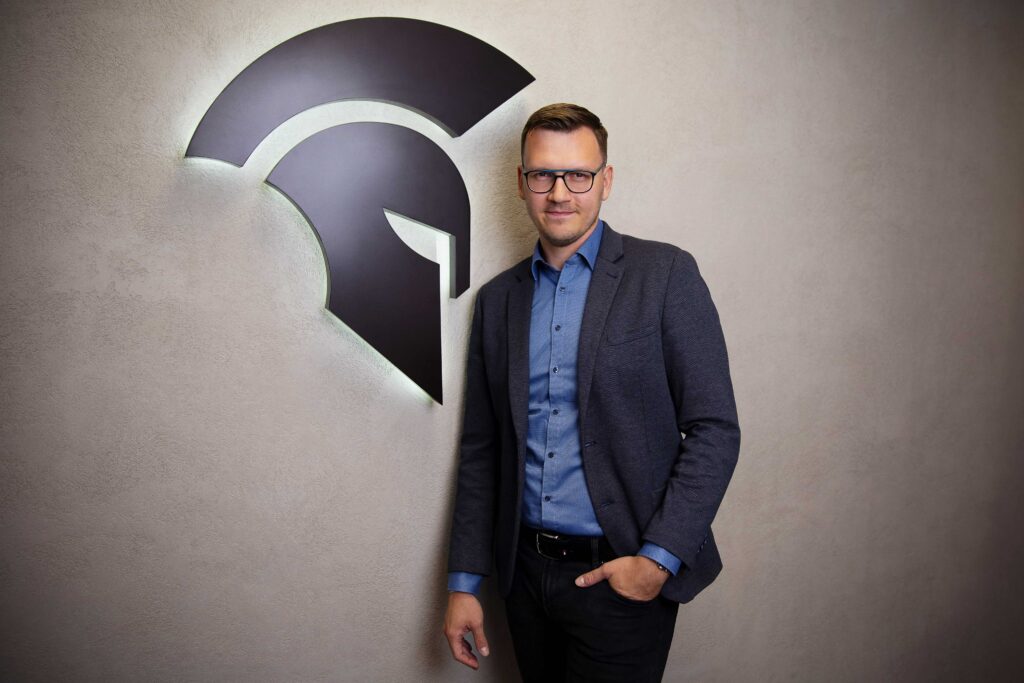
Patrik is a senior sales representative and business developer at TITANS; he is in charge of outsourcing for large companies across the market in the automotive industry, logistics and pharmacy. He says he doesn’t believe in pressure in sales. Instead, he puts together a mosaic, asks questions and connects dots before delivering what is needed — this way the manager only receives three CVs that make sense instead of fifty.
Patrik believes one of the greatest strengths of TITANS is its burgeoning EU database of over 31,000 IT freelancers, who cover the entire development lifecycle: project management and analysis, development and architecture, DevOps and infrastructure, data, security, and AI and support. We can handle difficult roles that many other suppliers don’t want to take on — from network engineers and virtualisation to security specialists. The key, he says, is relationships, empathy, and trust instead of spam.
How does Patrik envision the future of IT recruitment and the role of artificial intelligence, and how does he feel about the old Star Wars vs. Star Trek debate?
Patrick, how would you explain what you do to someone completely outside the field?
Simply put, I rent out employees to companies. And I do it like a detective — first I collect clues, I map the environment, find out who decides what, what the culture is like, and where things need tweaking. People contact me based on recommendations when they are truly in need, so it’s not just about ‘taking on a task’. I don’t want to ‘push’ meetings simply for KPIs — I prefer to come when I have a meaningful reason and can bring additional value. This saves everyone’s time and allows the creation of long-term relationships.
What’s different about working at a large company versus a medium-sized one?
In a large company, you usually have three or more stakeholders for one role — a ‘head of’, a manager under him, and a project person who understands the technology and the reality of the team. Everyone brings a different perspective, creating the whole picture together. Then there are global vendors, listings, governance, and purchasing — the journey is longer, but a well-set rhythm of meetings and quality assignments effectively shorten it. In medium-sized companies, there are fewer decision-makers, purchasing is local and faster — this is all the more noticeable when we bring in a candidate that is a 100% fit right from the start.
Why do we send 2-3 ‘fit’ profiles rather than 50 CVs?
A senior manager doesn’t have time to sort through dozens of CVs from five agencies. We prefer to take on more of the work on our side — we pre-filter the profiles, add a brief selection of the most important ones, and compile a small shortlist. Less noise means faster decisions and a better candidate experience. And when the client says: ‘That’s what we need,’ we can quickly expand the offer with comparable profiles — but we still believe in quality over quantity.
What else do you think we do differently than is usual in the market?
We have tens of thousands of verified contacts across the EU and we keep important metadata for each one — technologies, domains, project types, on-site/remote preferences, languages, availability. This allows us to reach out accurately and immediately, not after a week of searching on LinkedIn. And we don’t just have developers: we can build teams for project management, architecture, DevOps, infrastructure, data, security, AI and support. We can also deliver ‘heavy’ specialists. Internal HR often has many more tasks to handle and may lack the expertise that takes an experienced IT recruiter years to build.
How do you use AI in your work and where does it help you the most?
I use AI for deep pre-research of clients, creating quality job descriptions and acquisition lists (e.g. top companies that are currently looking for Salesforce specialists). It can find the context, decipher project shortcuts, and prepare materials before the meeting. I expect a boom in agents in the future — you speak, they will prepare emails, a shortlist and start pre-screening in real time. Administrative work will decline and more time will go into business and relationships.
What trends do you envision in the market?
I expect a strong wave of demand from European institutions and constant hiring from major players. Cybersecurity and AI are sweeping across the market — not as a buzzword, but in specific processes and productivity improvements. Companies want roles that connect infrastructure, data and security — there are few people that truly provide all of these. That’s why it pays to go European and not be afraid to combine full-remote and on-site depending on the criticality.
What were the most interesting or challenging roles you’ve had to fill in recent months?
There have been a lot of them lately. For example, CyberArk/PAM Engineer — a needle in a haystack, seniority and certification are rare, but the value to the client is enormous, and then seemingly ‘junior’ IT support with multilingual coverage EN + IT + ES + FR and mandatory on-site in Prague. Finding the language combination, technical mindset, and willingness to relocate isn’t a trivial matter. For these roles, it is crucial to narrow it down early and work on motivating the candidates, otherwise the search will drag on unnecessarily.
What advice would you give a company that needs top-notch IT people and wants to work with you as effectively as possible?
Give us the context — goals, constraints, team culture, and the reality of the project. Let’s agree on exactly what you’re looking for and stick to the principle of a ‘maximum of three fit profiles’ to save time. Let’s have short quarterly meetings to keep the common ‘radar’ memory running and to allow us to switch priorities in time. And let’s think on an EU scale — when the role is specific, a broader hunt makes sense and increases the chance of success.
How quickly can we deliver a shortlist?
For a well-specified role, we rely on our database and existing relationships, so we can often provide the first profiles within 2-3 working days. For difficult specialisations (e.g. PAM, networkers with specific vendor certifications, language combinations), it is fair to expect longer market research — it’s best to set milestones (e.g. continuous check-in after 5 days) and fine-tune the direction together. We do not base speed on quantity, but on the accuracy of the assignment and immediate work with validated candidates.
Where do you imagine your role will shift to in a year?
Less administration, more business development and strategic client development — I want to be even more on the client side, opening doors, developing partnerships, and helping colleagues grow with key customers. We will leave many repeatable tasks to machines, but relationships, understanding context, and the ability to ‘put the pieces of a puzzle together’ will remain human. And yes, IT recruitment will still be detective work.
And now a mandatory cultural question: Star Wars or Star Trek?
Both; it’s about the story, the world, and the team — just like any good project. Whether you have lightsabers or a star fleet, what matters is the mission and the people you carry it out with.
Titans that have
joined us

Clients that have
joined us

Succcessfully supplied
man-days